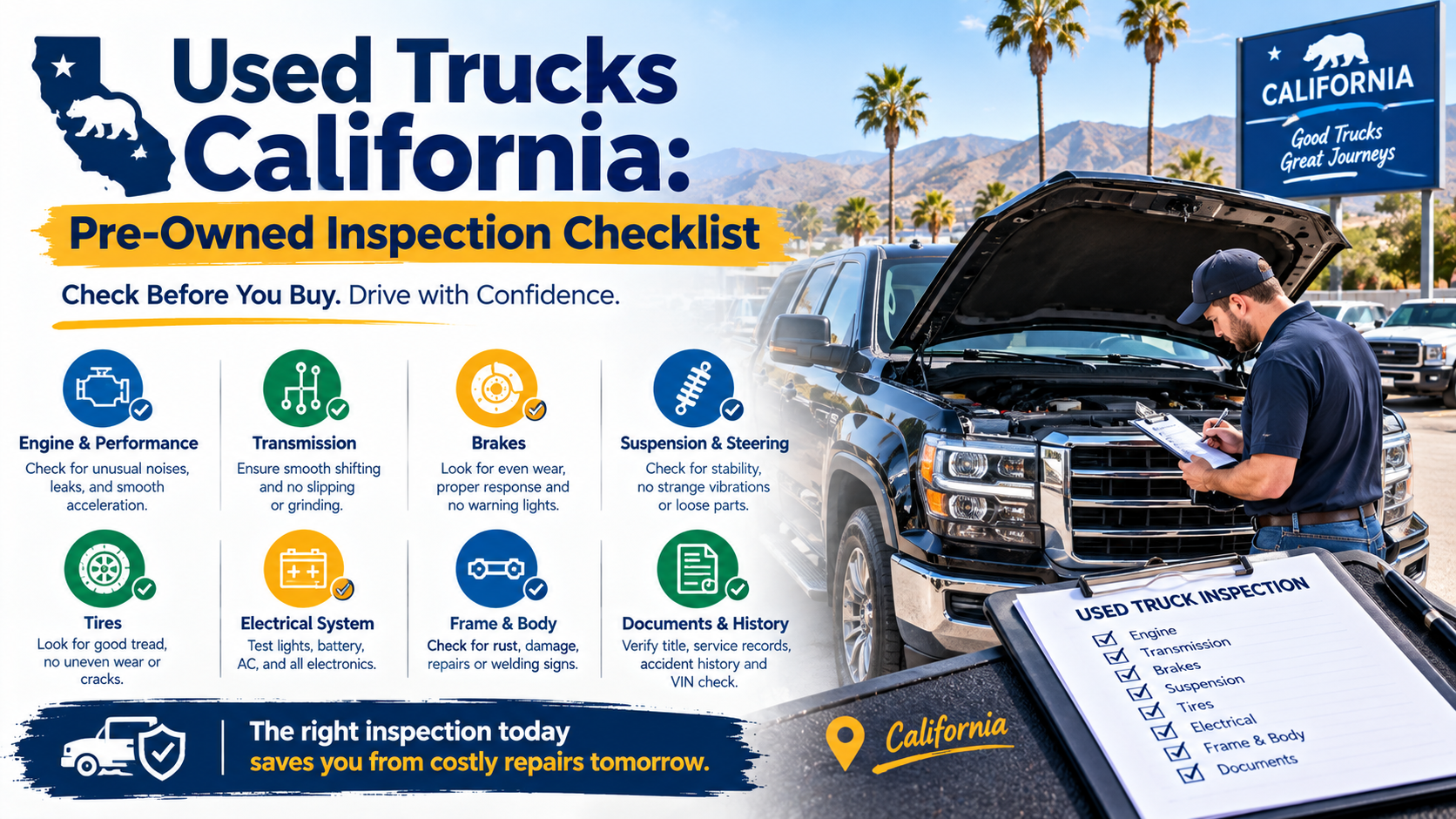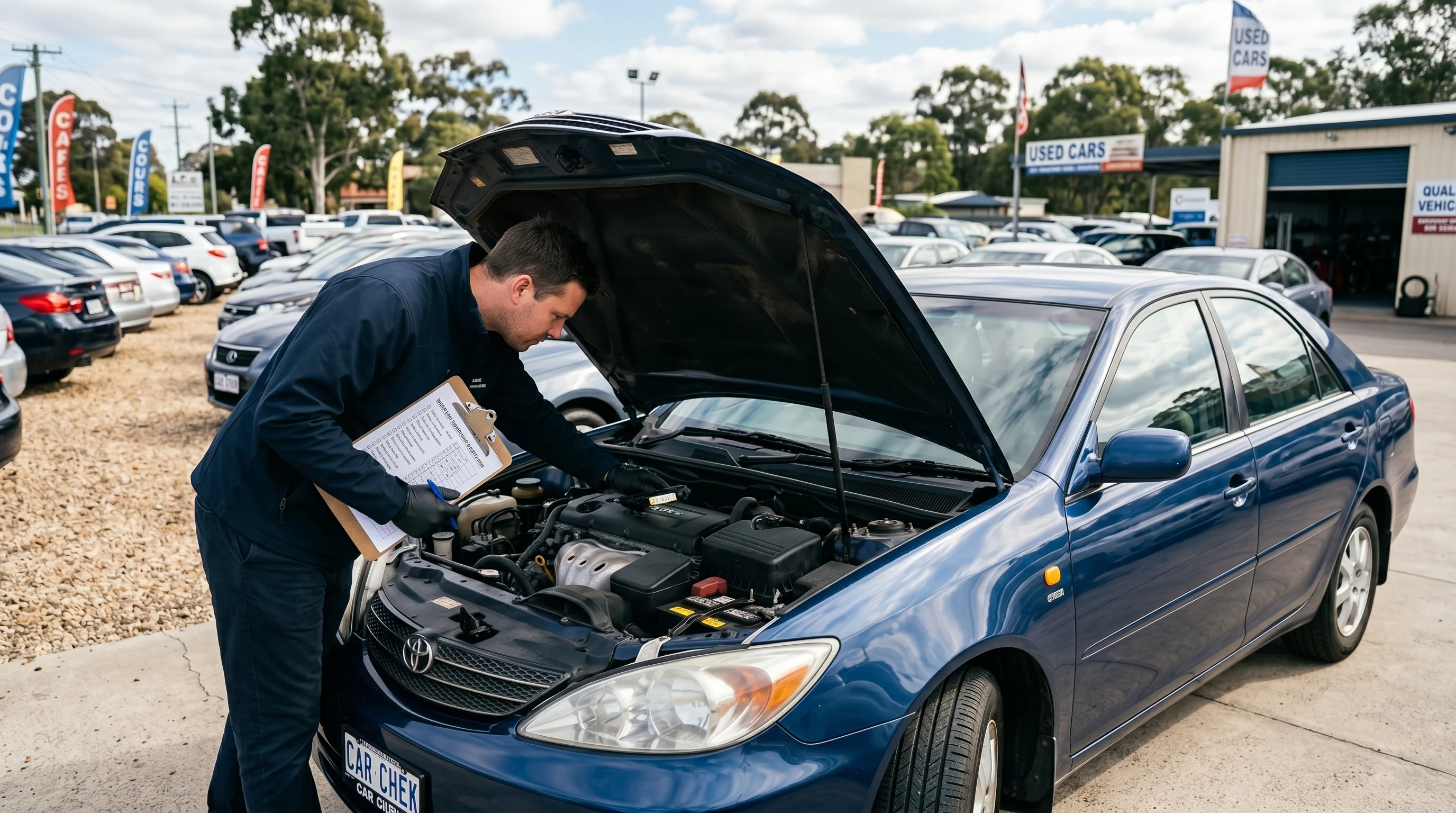

Before buying any pre-owned vehicle, you should perform a thorough physical inspection. Use this comprehensive checklist during your next vehicle viewing on CarListingHub.com to identify potential issues before you buy.
Exterior and Body Inspection
- Check for consistent body panel gaps; uneven spaces indicate previous accident repairs.
- Inspect for mismatched paint colors on doors, fenders, and bumpers.
- Use a small magnet along the rocker panels to check for hidden body filler (Bondo).
- Inspect all window glass for small chips, cracks, or pitting.
- Look inside the trunk and spare tire well for signs of crinkled metal or hidden rust.
- Examine the tires for uneven tread wear patterns that indicate alignment issues.
Under the Hood and Fluids
- Check the engine oil dipstick; a milky texture indicates a blown head gasket.
- Inspect the transmission fluid; it should be translucent red, not burnt black.
- Look around the valve cover and oil pan gaskets for active fluid leaks.
- Check the brake fluid level and color; it should be clear and light amber.
- Inspect the engine drive belts for fraying, cracking, or dry rot.
- Examine radiator hoses to ensure they are firm and free of cracks.
Interior and Electronics
- Turn on the ignition key to confirm that the Check Engine Light illuminates briefly during startup.
- Test the air conditioning system to verify it blows consistently cold air.
- Verify that all power windows, door locks, and side mirrors operate smoothly.
- Test all seating adjustment controls and inspect the seatbelt mechanisms.
- Check the condition of the dashboard, steering wheel, and upholstery for excessive wear.
- Test the audio system, Bluetooth connectivity, and any onboard navigation screens.
The Test Drive Assessment
- Listen for any knocking, pinging, or ticking sounds from the engine during a cold start.
- Confirm the transmission shifts smoothly without slipping or hesitating under acceleration.
- Test the brakes on a flat road to ensure the car stops straight without pulling or vibrating.
- Drive over bumps at low speeds to check for clunking noises from the suspension.
- Accelerate up to highway speeds to check for steering wheel vibrations.
- Confirm the vehicle tracks straight on a flat road when you safely loosen your grip on the wheel.
- Use an OBD-II scanner after the drive to verify there are no hidden or pending trouble codes.