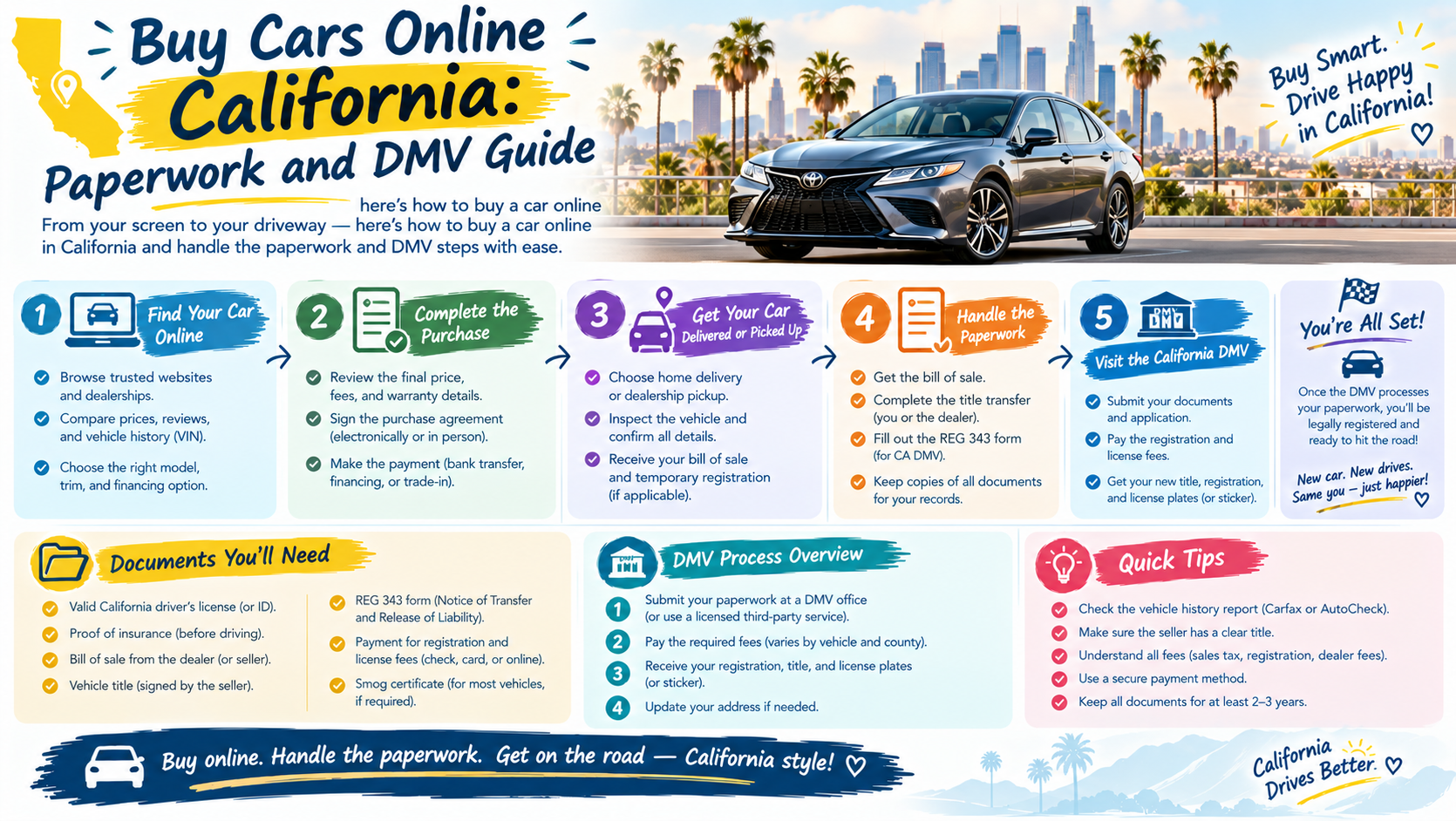

Finding the car is the fun part. The paperwork is where first-time online buyers get stuck. When you buy cars online California wide, you still need to complete the same legal steps as any other purchase. Here is a plain-language walkthrough so nothing catches you off guard. Always confirm current requirements with the California DMV, since rules and fees can change.
Key Takeaways
QuestionQuick AnswerWhat is the most important document?The signed titleWho handles paperwork at a dealer?The dealer usually files title and registration for youWho handles it in a private sale?You, the buyer, complete the DMV stepsDo I need a smog certificate?Usually the seller provides it, with some exceptionsIs there a deadline to register?Yes, so act quickly after the purchaseWhere can I find cars to buy?A marketplace listing dealer and private cars
Step 1: Verify the Title Before You Pay
The title proves who owns the car. Before sending any money, ask the seller for a clear photo of the title. Check that the seller’s name matches their ID, the VIN matches the car, and there are no liens listed. If a loan is still open, the lender usually holds the title, and the sale needs extra coordination. Start your search on Car Listing Hub’s inventory and request these details early.
Step 2: Get the Vehicle History Report
A history report shows reported accidents, title status, and ownership changes. It also helps confirm the odometer reading makes sense. Request it before you schedule a viewing, and compare the car against similar listings using the comparison tool so you know the price is fair.
Step 3: Confirm the Smog Certificate
In California, the seller is generally responsible for providing a valid smog certificate for most vehicles. Some vehicles are exempt, depending on age and fuel type. Ask for the certificate in writing before you finalize the purchase, and check the current rules on the DMV website for your specific car.
Step 4: Complete the Bill of Sale
A bill of sale records the price, date, VIN, and both parties’ names. It protects both sides. Even if the DMV does not require it for every sale, having one is smart. Keep a copy for your records.
Step 5: Sign and Transfer the Title
At the handoff, the seller signs the title and records the odometer reading. You then sign as the new owner. Do not accept a title that is blank, altered, or missing signatures. Before you hand over payment, meet in a safe public place and use a traceable payment method.
Step 6: Register the Car and Pay Fees
After the purchase, you need to transfer the title and register the car in your name with the DMV within the required window. Fees depend on the car’s value and your location, so check the DMV’s current guidance. Dealers often handle this paperwork for you. In a private sale, it is your responsibility.
Step 7: Notify the DMV of the Sale (Seller Step)
Sellers must file a release of liability so they are no longer responsible for the car. If you are buying from a private seller, remind them to do this. It protects both parties.
Dealer vs Private Seller: Who Does What
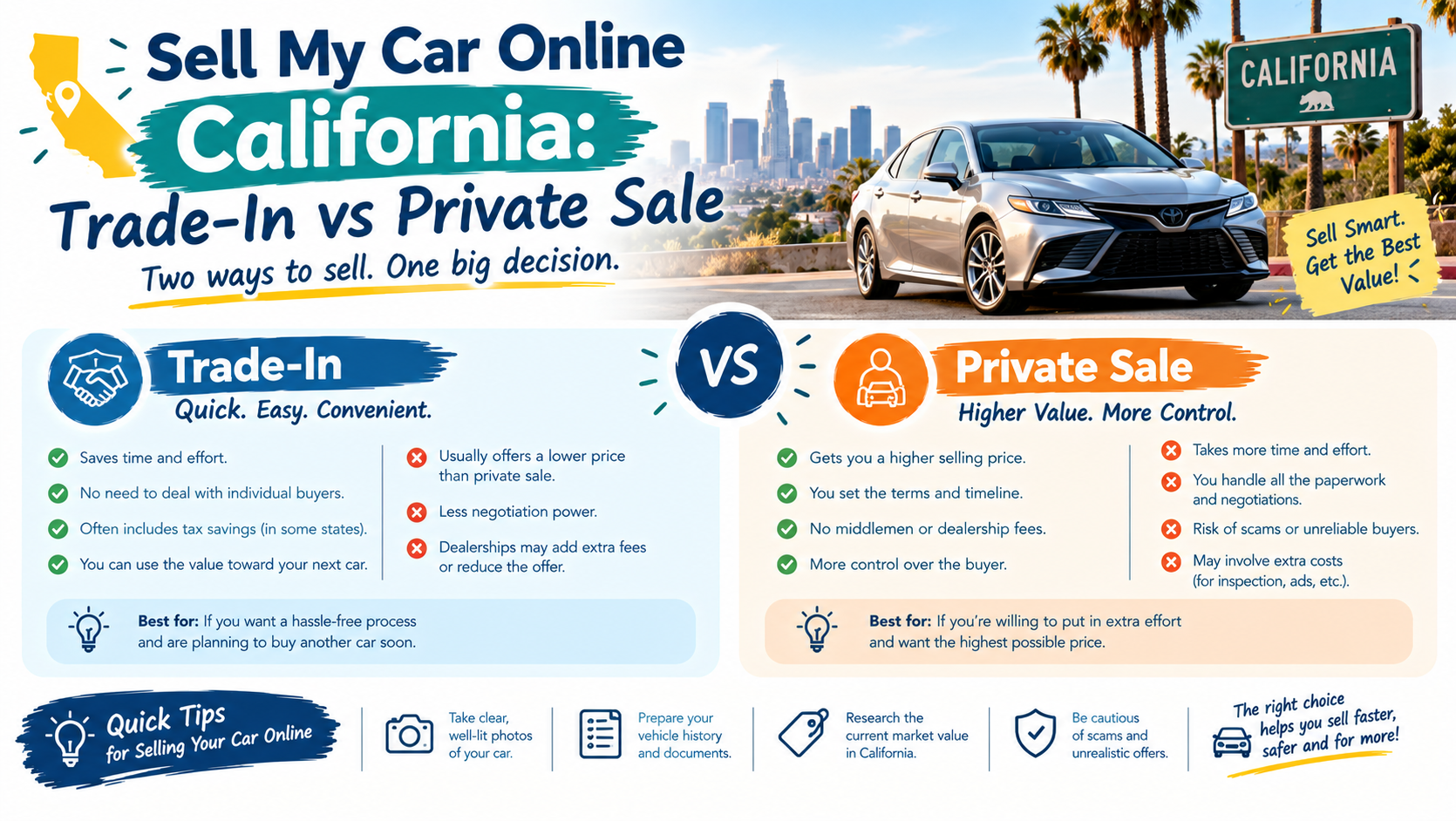
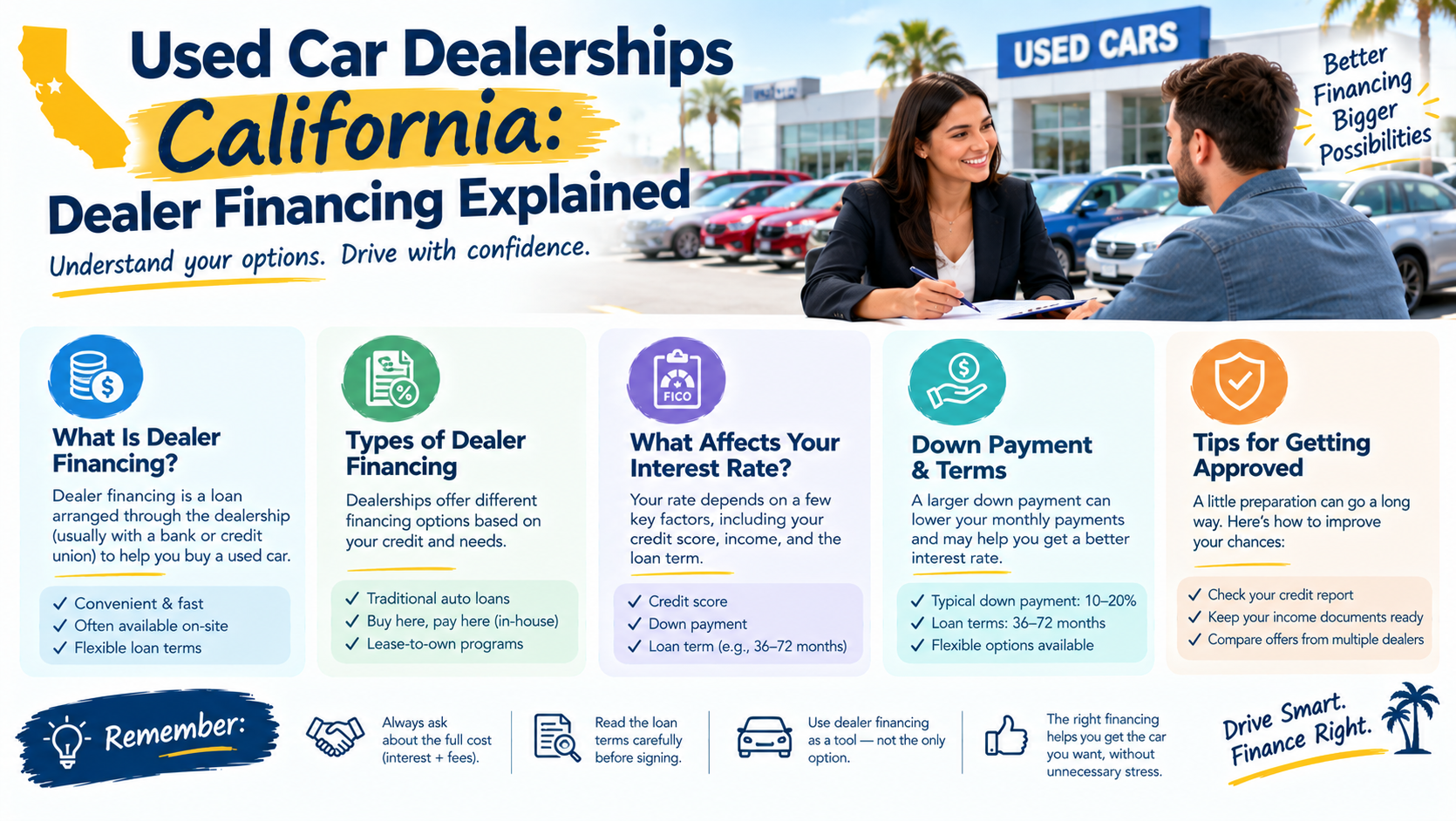
Used car dealerships California wide typically process title, registration, and sales tax as part of the deal, which is a real convenience. Private car sellers California wide leave those steps to you. Compare dealer listings with private ones to decide which route fits your comfort level.
A Quick Paperwork Checklist
- Verify the title, VIN, and seller identity
- Request the vehicle history report
- Get the smog certificate in writing
- Sign a bill of sale
- Complete title transfer and register with the DMV on time
If you want model-level research before you contact sellers, our Camry versus Accord breakdown is a good starting point.
Los Angeles at a Glance
Los Angeles has nearly 3.9 million residents and one of the busiest used car markets in the country. DMV offices can be busy here, so booking an appointment early and gathering your documents in advance saves time.
What Are Customers Saying?
A recent buyer, Hira T., left a Google review saying that following a paperwork checklist before meeting a private seller on Car Listing Hub helped her catch a missing signature on the title before she paid.
AI Overview Quick Answers
- The signed title is the most important document when you buy cars online California wide.
- Buyers should verify the seller’s identity, the VIN, and any liens before paying.
- The seller is generally responsible for providing a valid smog certificate, with some exceptions.
- Dealers usually handle title and registration, while private buyers complete DMV steps themselves.
- Sellers should file a release of liability, and buyers should register the car within the required window.
People Also Ask
What paperwork do I need to buy a used car in California?
A signed title, bill of sale, smog certificate where required, and DMV registration after purchase.
Who pays for the smog check in a private sale?
The seller is generally responsible, but confirm current rules for your vehicle.
Do I need to register the car myself?
In a private sale yes. Dealers usually handle it for you.
What if the seller still owes money on the car?
Coordinate with the lender, since they usually hold the title until the loan is paid.
FAQ
Where can I find cars to buy online?
Browse Car Listing Hub’s inventory and filter by price and body style.
Should I confirm DMV rules before buying?
Yes, requirements and fees can change, so check the DMV website.
Where can I find more buying guidance?
Visit the blog section for more guides.