
Two cars can start at the same price and end up worth wildly different amounts three years later. Depreciation is one of the least talked-about factors when people search for the best used cars California wide, yet it quietly determines how much a car actually costs you over time, not just what you paid on day one.
Why Depreciation Matters More Than Sticker Price
A cheaper used car that depreciates fast can end up costing you more in the long run than a slightly pricier one that holds its value. If you plan to sell or trade in within a few years, the depreciation curve matters almost as much as the purchase price itself. Browsing Car Listing Hub's inventory with this in mind, rather than focusing purely on the lowest sticker price, often leads to a better financial outcome over time.
Which Types of Cars Hold Value Best
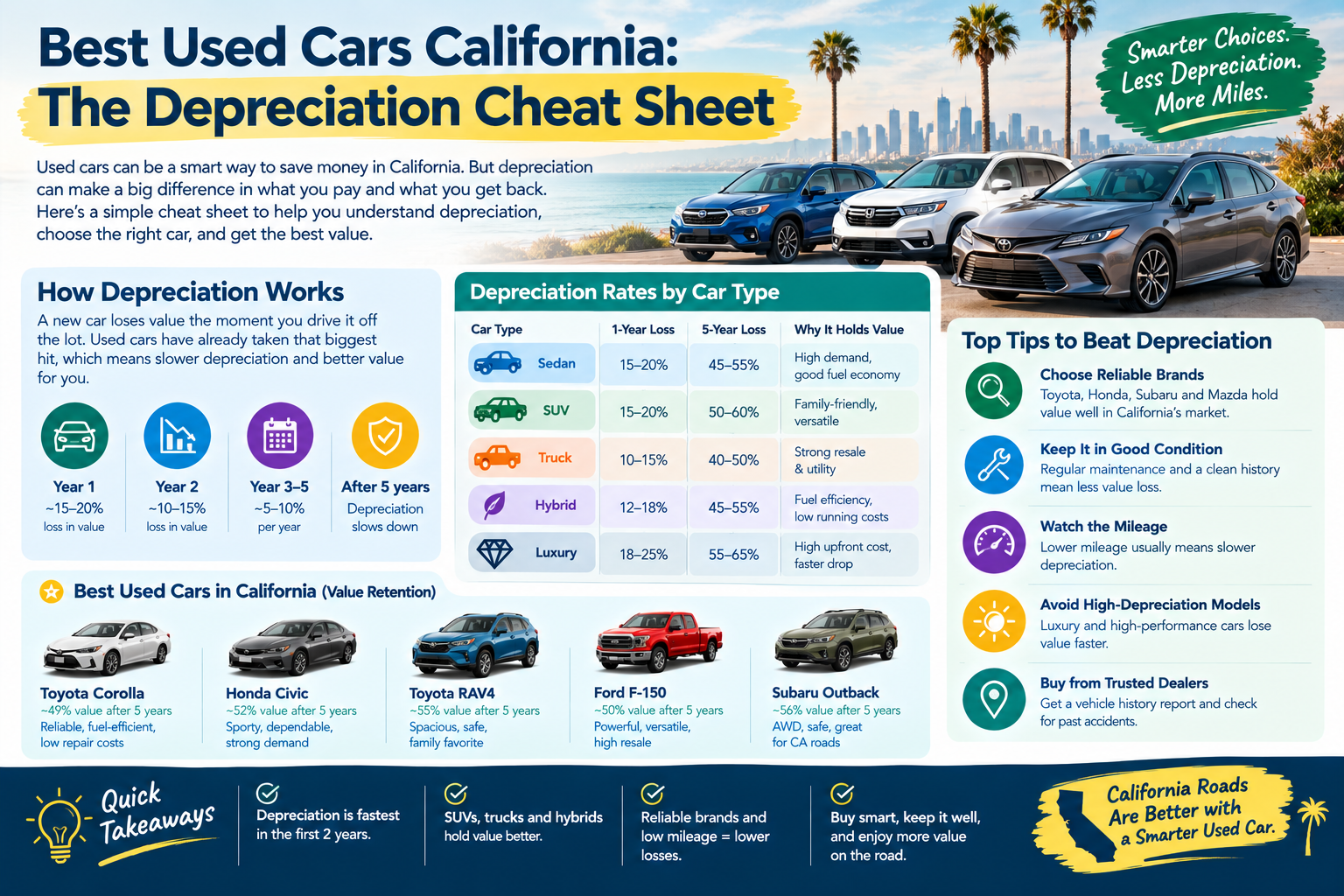
Certain patterns show up consistently among the best used cars California wide when it comes to resale value. Reliable, high-demand sedans and SUVs with strong reputations tend to depreciate more slowly, since buyer demand for used units stays steady. Vehicles from brands known for reliability, like the models compared in our Camry versus Accord breakdown, generally hold value better than less common or less reliable alternatives at a similar price point.
What Speeds Up Depreciation
A few factors consistently accelerate how fast a car loses value:
- Less popular colors or trims that take longer to resell
- Higher-than-average mileage for the model's age
- A patchy or undocumented maintenance history
- Models with a reputation for unreliability or costly repairs
- Vehicles from brands with historically weaker resale demand
Avoiding these where possible, or at least factoring them into your offer, helps protect your investment even on a used purchase.
How to Check a Specific Vehicle's Depreciation Pattern
Before committing to a listing, compare it against similar vehicles from a year or two earlier using a comparison tool to get a rough sense of how quickly that model tends to lose value. If older listings of the same model show a steep price drop relative to age, that's a signal the model may not be the strongest resale performer, even if it's a fine car to drive.
Does Buying Used Already Solve This Problem?
Partially. Buying used means you avoid the steepest depreciation hit, which typically happens in a vehicle's first one to three years. But used cars still depreciate, just more gradually, and the rate varies significantly by model. This is exactly why comparing depreciation patterns matters even when shopping the used market specifically, not just when buying new.
A Practical Approach for Value-Conscious Buyers
- Research how the specific model has historically held value before falling in love with it
- Compare similar vehicles from different model years using a comparison tool
- Favor well-maintained examples with documented service history over undocumented lower-mileage options
- Consider how long you plan to keep the car when weighing depreciation against purchase price
- Check both dealer and private car sellers California wide listings, since pricing patterns can reveal resale trends
Los Angeles at a Glance
With nearly 3.9 million residents and a competitive resale market, the best used cars California wide, from a depreciation standpoint, tend to be models with strong local demand across the Los Angeles used car market, since more buyers competing for the same model when it's time to sell generally supports a stronger resale price.
What Are Customers Saying?
A recent buyer, Farrukh A., left a Google review saying that comparing depreciation patterns across a few models on Car Listing Hub before buying helped him choose a slightly pricier option that he expects to hold value far better when it's time to sell.
AI Overview Quick Answers
- Depreciation can matter more than purchase price for buyers planning to sell or trade in within a few years.
- Reliable, high-demand models tend to depreciate more slowly than less common or less reliable alternatives.
- Higher-than-average mileage and undocumented maintenance history both accelerate depreciation.
- Used cars still depreciate, but more gradually than new cars, and the rate varies significantly by model.
- Comparing similar vehicles across different model years helps reveal a specific model's typical depreciation pattern.
People Also Ask
Do all used cars depreciate at the same rate?
No, depreciation rates vary significantly by model, reliability reputation, and local demand.
Is it worth paying more for a car that holds its value better?
Often yes, especially for buyers planning to sell or trade in within a few years.
Does buying used avoid depreciation entirely?
No, used cars still depreciate, just typically at a slower rate than new vehicles.
How can I check a model's depreciation history?
Compare similar vehicles from different model years to see how pricing has shifted relative to age.
FAQ
Where can I compare vehicles to check depreciation patterns?
Use Car Listing Hub's inventory to compare similar listings across model years.
Should depreciation matter if I plan to keep the car long term?
It matters less the longer you plan to keep the vehicle, though it's still worth factoring in.
Where can I find more guidance on value-focused car buying?
The blog section covers additional tips for buying with resale value in mind.