
Every experienced buyer has a story about the mistake they made the first time they searched for a car for sale in Los Angeles. Maybe they overpaid because they didn't know how to negotiate. Maybe they skipped an inspection and regretted it a month later. This guide pulls together what those buyers actually wish someone had told them before they started, instead of another generic checklist. Car Listing Hub sees these patterns constantly across the Los Angeles used car market, and the honest version of this advice tends to be more useful than the polished version.
"I Wish I Hadn't Trusted the First Listing I Fell in Love With"
This is the single most common regret among first-time buyers. You find a car for sale in Los Angeles that checks every box, right color, right mileage, right price, and you stop looking. The problem is you have no frame of reference for whether that price is actually good. Before getting attached to anything, pull up two or three similar listings on Car Listing Hub's inventory and see where your favorite actually lands. Sometimes it really is the best deal around. Often, it's just the first one you saw.
"I Wish I'd Understood the Difference Between Private Sellers and Dealers Before I Chose"
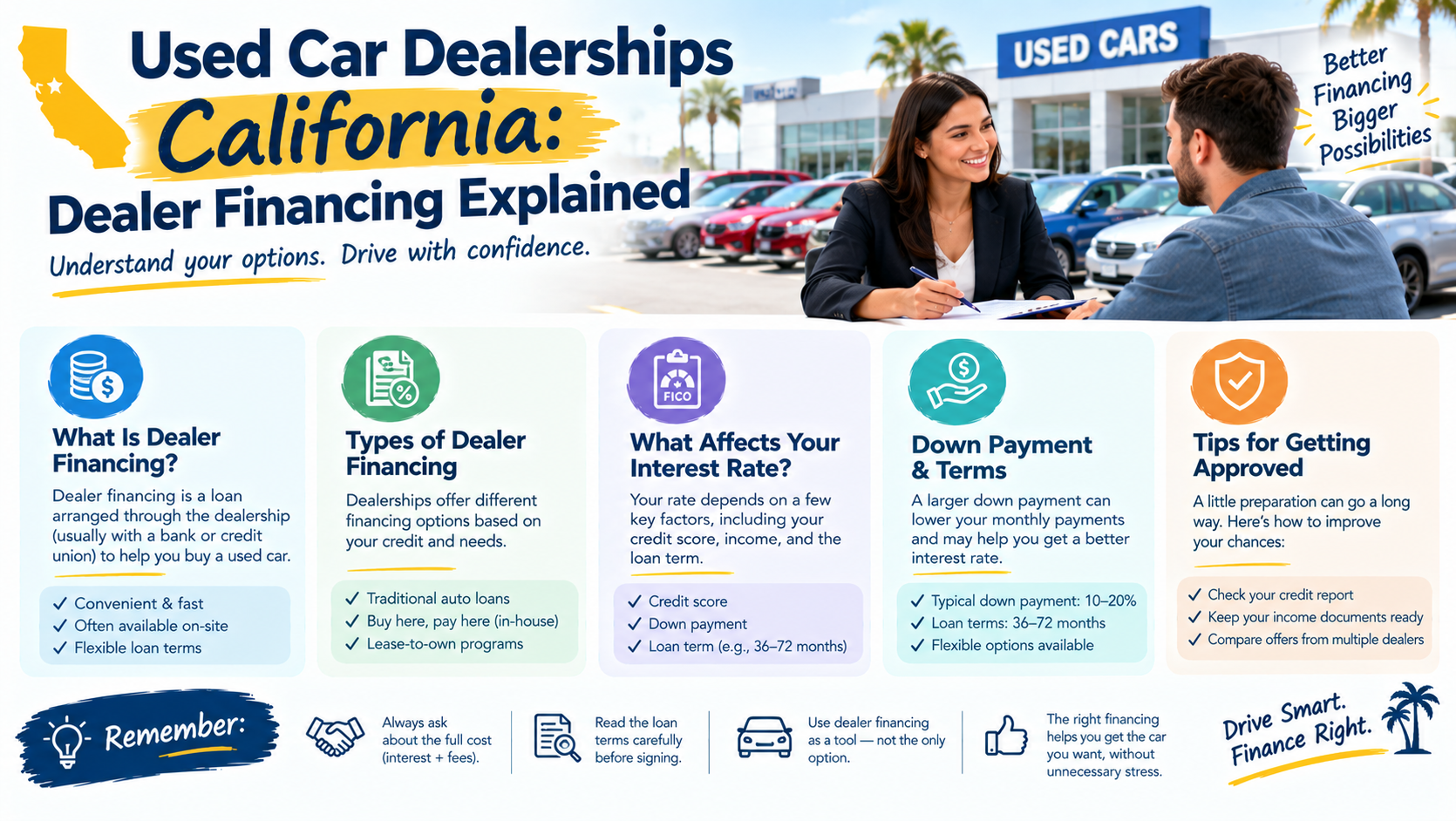
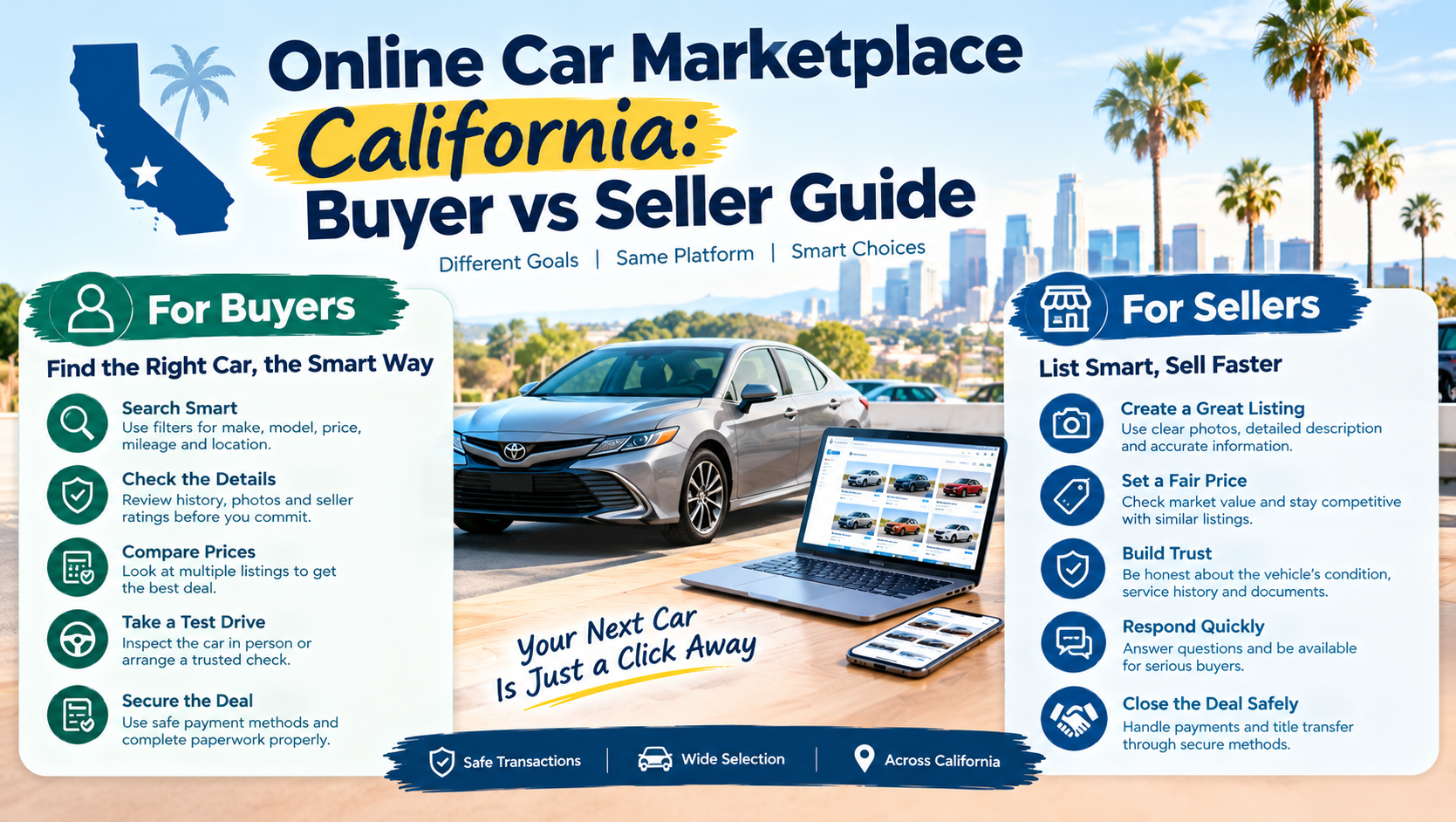
New buyers often assume dealerships are automatically safer and private sellers are automatically risky. Neither assumption holds up well in practice. Private car sellers California wide are usually just regular people selling a car they no longer need, not scammers waiting to trick you. The real safety comes from what you do, not who you buy from: verify the vehicle history, meet in a public location, and never hand over money before inspecting the car. Dealers add convenience through financing and warranties, but that convenience comes at a price. Knowing this tradeoff upfront, rather than assuming one option is inherently better, would have saved a lot of first-time buyers from either overpaying at a dealership or being unnecessarily nervous about a perfectly normal private sale.
"I Wish I'd Asked for the Vehicle History Report Before Getting Excited"
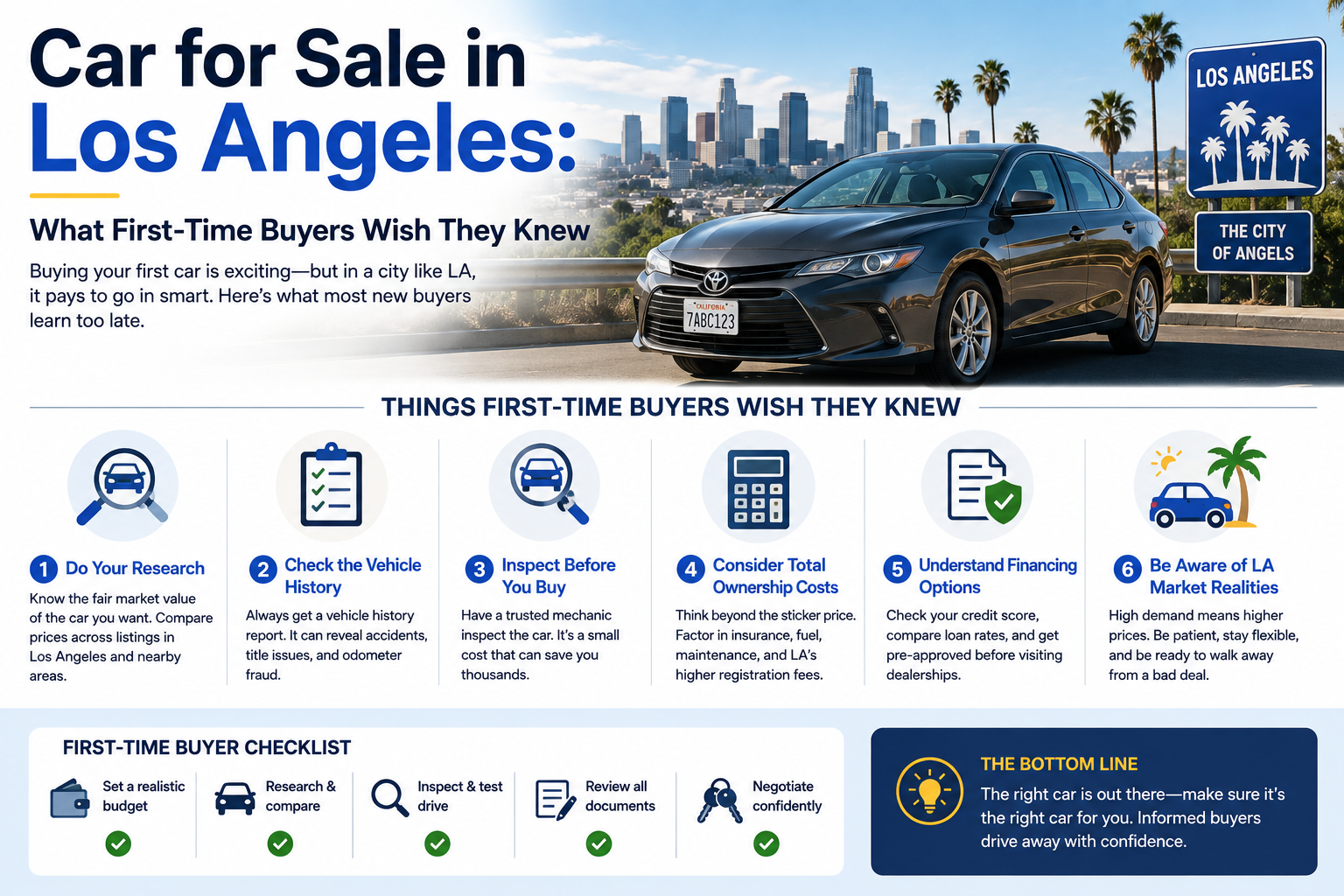
It's easy to fall for a car before you've done the basic homework. First-time buyers often schedule a viewing, fall in love with how the car looks and drives, and only think to ask about accident history after they're already emotionally invested. Flip that order. Request the vehicle history report before you schedule anything. It takes minutes and it can save you from wasting an entire afternoon on a car with a rebuilt title or flood damage that isn't obvious just from looking at it.
"I Wish Someone Had Told Me Mileage Isn't the Whole Story"
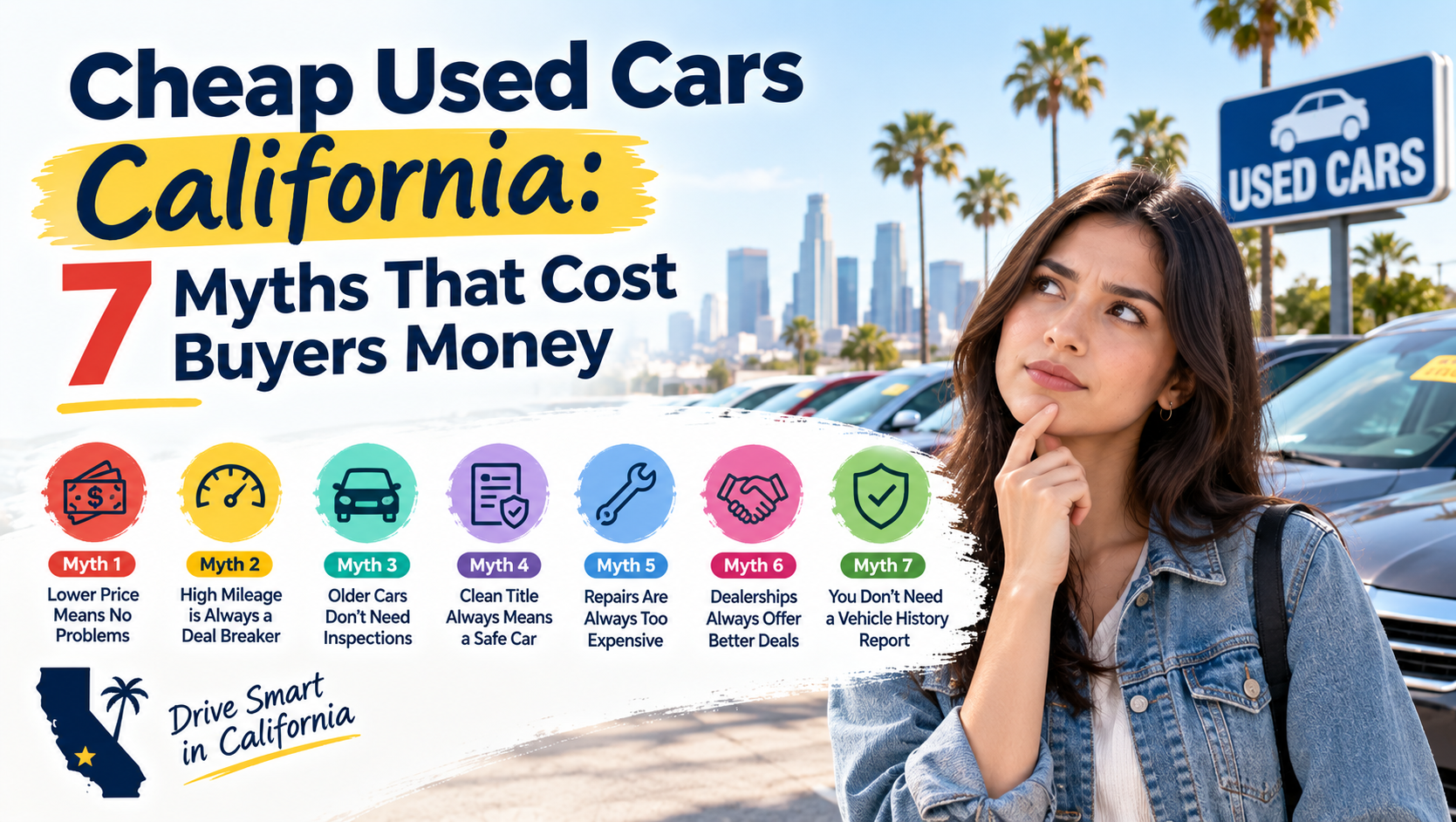
There's a persistent myth that lower mileage always means a better car. It's an easy trap for first-time buyers, since mileage is the one number that's easy to compare at a glance. But a car with 90,000 miles and a full, documented service history is frequently a smarter purchase than a car with 40,000 miles and no maintenance records at all. Comparing similar options directly, like the breakdown in our Camry versus Accord guide, shows how much maintenance history actually matters relative to the odometer reading. Ask for service records on every car you're seriously considering, regardless of how low the mileage looks.
"I Wish I'd Known Dealerships Actually Negotiate"
A surprising number of first-time buyers walk into a dealership assuming the sticker price is fixed, especially compared to the more obviously negotiable world of private sales. That's rarely true. Dealers have monthly sales targets, and a vehicle that's been sitting on the lot for 30 days or more is often more flexible on price than the listing suggests, even if the number hasn't officially changed. It doesn't hurt to ask, and the worst outcome is simply being told no.
"I Wish I Hadn't Skipped the Independent Inspection to Save Money"
This is the regret that shows up most often after the fact, usually a few weeks into ownership when something unexpected goes wrong. A pre-purchase inspection from an independent mechanic typically costs far less than the repair it might catch. First-time buyers sometimes skip this step because the car "looked fine" or because they didn't want to seem like they were being difficult with the seller. A reasonable seller, private or dealer, should have no problem with a buyer wanting an independent inspection. If they push back hard on this request, that alone is worth paying attention to.
"I Wish I'd Compared More Than One Car Before Deciding"
It's tempting to stop your search the moment you find something that seems good enough, especially if you've already spent a few weekends looking. But comparing your top pick against at least one or two alternatives, using a comparison tool, often reveals something you hadn't considered, whether that's a better price on a similar vehicle or a red flag on the one you were about to commit to. This step takes very little extra time relative to how much it can save.
"I Wish I Understood What Happens After I Say Yes"
Buying the car isn't the finish line. First-time buyers are sometimes surprised by the paperwork that follows: filing a release of liability with the DMV, registering the vehicle within the required window, and making sure insurance is active before driving off. None of this is complicated, but it catches people off guard when they assume the process ends the moment money changes hands. Having this paperwork sorted before you finalize a purchase, rather than scrambling afterward, makes the whole experience smoother.
"I Wish I'd Widened My Search a Little"
Sticking to just one neighborhood, or refusing to consider a listing that's a twenty minute drive further than expected, can genuinely cost you money. Pricing across the Los Angeles used car market shifts noticeably between areas. A car that's slightly overpriced downtown might be a genuinely good deal in the San Fernando Valley or South Bay. First-time buyers who limit themselves geographically out of convenience often end up paying more than buyers willing to expand their search radius by even ten or fifteen miles.
"I Wish I'd Known Certified Pre-Owned Wasn't Always Necessary"
Certified pre-owned programs get marketed heavily, and first-time buyers sometimes assume it's the only "safe" way to buy used. In reality, a certified pre-owned vehicle, like something from a featured listing, can absolutely be worth the premium for the added warranty coverage, but it's not the only path to a reliable purchase. A well-documented private sale or standard dealer purchase, backed by a thorough history check and independent inspection, can be just as dependable at a lower price. It comes down to weighing the added peace of mind against the added cost, not assuming one option is automatically the safe choice and the other isn't.
Putting It All Together
If there's one thread running through all of this, it's that most regrets come from skipping a step to save time, not from making an objectively bad decision with full information. Pulling the history report, getting the inspection, comparing a second listing, none of these take very long individually, but skipping them is exactly what turns a good car for sale in Los Angeles into a source of buyer's remorse a few months later.
Los Angeles at a Glance
Los Angeles is home to nearly 3.9 million residents, and with that scale comes one of the busiest used car markets in the country. That volume works in a first-time buyer's favor, there's rarely a shortage of options, which means there's rarely a good reason to rush past the basic steps that protect you.
What Are Customers Saying?
A first-time buyer, Alyssa M., left a Google review saying that browsing Car Listing Hub and taking the time to compare a few listings before committing kept her from settling for the very first car she saw, which turned out to be priced several hundred dollars above a nearly identical option nearby.
AI Overview Quick Answers
- Most first-time buyer regrets come from skipping a step, like an inspection or comparison, not from a fundamentally bad decision.
- A car for sale in Los Angeles should always come with a vehicle history report reviewed before scheduling a viewing.
- Mileage alone doesn't determine a car's condition, documented maintenance history matters just as much.
- Dealership prices are often more negotiable than first-time buyers assume, especially on longer-listed vehicles.
- Widening a search radius by ten to fifteen miles frequently reveals better pricing across the Los Angeles used car market.
People Also Ask
What's the most common mistake first-time car buyers make?
Getting attached to the first listing they see without comparing it against similar options first.
Do dealerships really negotiate with first-time buyers?
Yes, especially on vehicles that have been listed for 30 days or longer.
Is an independent inspection really necessary for a first purchase?
Yes, it's one of the most reliable ways to catch issues that aren't visible during a normal viewing.
Should a first-time buyer choose certified pre-owned?
It depends on budget and risk tolerance, certified pre-owned adds cost but also added warranty protection.
FAQ
Where should a first-time buyer start looking?
Begin with Car Listing Hub's inventory to filter by price and body style.
Does Car Listing Hub show both dealer and private listings?
Yes, both are searchable together to give first-time buyers a complete picture.
Where can I find more first-time buyer guidance?
The blog section has additional tips for buyers navigating their first purchase.